The hardware store on the high street, Tisbury Supplies, sell tick remover tools that make this a simple task you can do at home.
There is usually no need to attend the surgery for the removal of ticks. Unless you are concerned of the presence of a ‘bullseye rash’ (erythema migrans) or symptoms which may be associated with Lyme’s disease, tick bites can be self-managed and so we do not offer appointments routinely to remove ticks at the surgery.
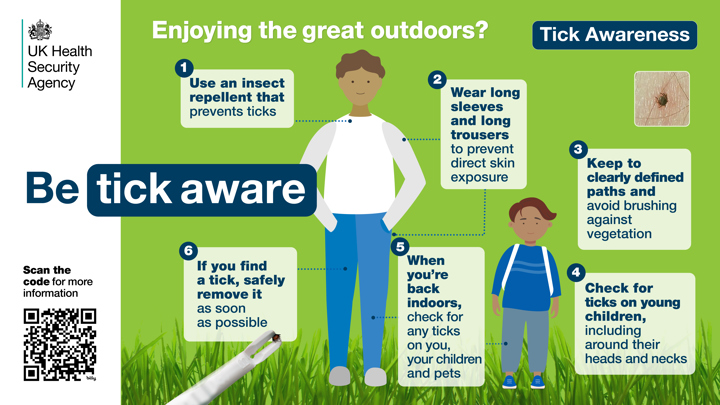
How do I prevent tick bites?
Ticks are most active in spring, summer, and early autumn and you are therefore at more risk during these times.
- Cover your skin, wear long trousers and books, and tuck trousers into socks when walking in the long grass.
- If you work in tick infected areas, do not wear your work clothes home
- Examine yourself and your children for ticks after exposure and remove all ticks as soon as possible. Remember, some ticks are no bigger than a pencil dot.
How do I remove a tick?
Do not: Squeeze the tick or try to smother the tick with Vaseline or other substances
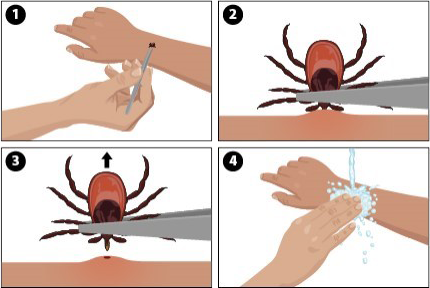
- Remove the tick by grasping as far forwards as possible with a tick remover, forceps, or fine tweezers
- Pull gently upwards and remove the tick, taking care not to leave mouthparts in the skin. However, left behind mouthparts do not increase the risk of Lyme’s disease.
- Do not try to dig out any retained parts of a tick. This increases the risk of skin infection, and your body will naturally expel them like a splinter.
- Disinfect the skin to reduce the chance of skin infection
When to see a healthcare professional?
Contact the surgery if you’ve been bitten by a tick or visited an area in the past 3 months where infected ticks could be, and you either:
- feel unwell with flu-like symptoms – such as feeling hot or cold, feeling shivery, headaches or aching muscles
- have a round or oval shape rash around the bite site
Remember to let us know if you have recently been in forests or grassy areas.
For more information: Tick Removal | Lyme Disease Action